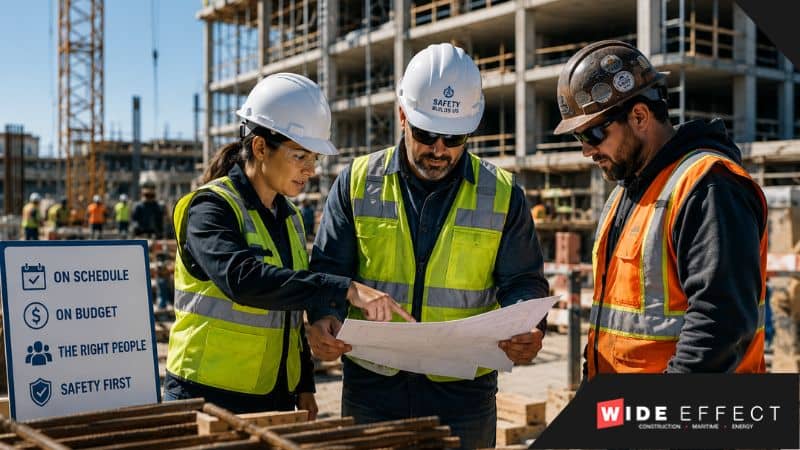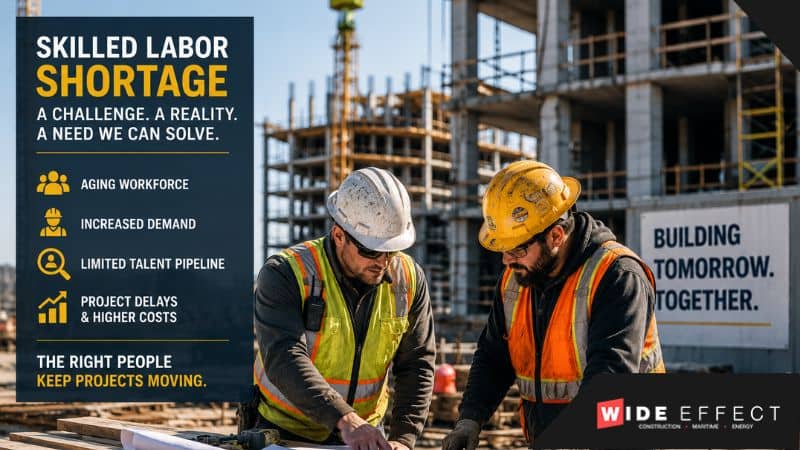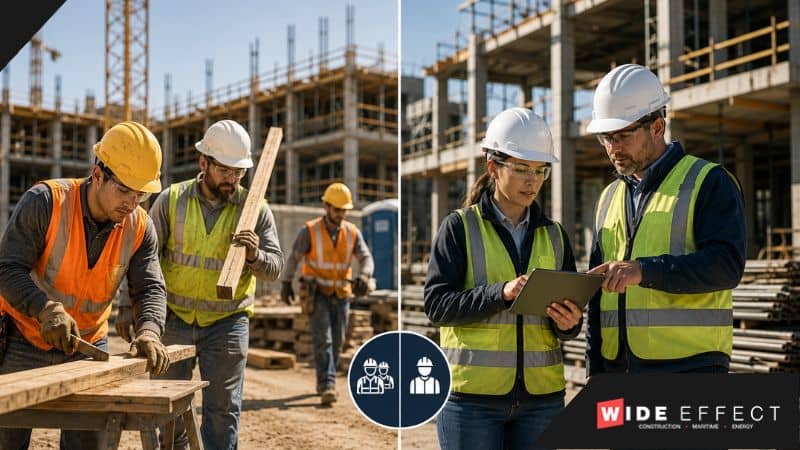

Specialty trades professionals are among the hardest workers to recruit in today's construction industry. Growing demand for experienced electricians, welders, pipefitters, HVAC technicians, and other specialized professionals has made hiring more competitive than ever. Partnering with a trusted Construction Staffing provider helps contractors fill critical positions faster, reduce hiring delays, and maintain productivity across commercial and industrial projects.
Successfully hiring specialty trades requires more than posting job openings. Contractors need proactive recruitment, workforce planning, employee retention, and access to experienced professionals who can contribute immediately. By leveraging Construction Staffing, businesses can strengthen their talent pipeline, reduce project delays, improve workforce stability, and confidently meet the growing demand for specialized construction expertise. Access to experienced specialty trades professionals helps contractors fill critical roles faster, maintain project schedules, and improve overall workforce flexibility as hiring challenges continue to grow.
Specialty trades professionals have become some of the most difficult employees to recruit in today's construction industry. While general labor shortages continue affecting contractors across North America, the demand for experienced electricians, welders, pipefitters, HVAC technicians, instrumentation specialists, millwrights, and other specialty trades has reached unprecedented levels. As commercial, industrial, manufacturing, infrastructure, and data center projects continue expanding, competition for these highly skilled professionals has intensified.
Unlike general construction positions, specialty trades require extensive technical knowledge, certifications, safety training, and years of practical experience. Contractors cannot simply hire inexperienced workers to immediately fill these roles. Many specialty trades professionals spend years developing the skills necessary to work independently on complex construction projects, making experienced candidates extremely valuable.
The construction industry also faces the challenge of an aging workforce. Many experienced tradespeople are approaching retirement, taking decades of technical expertise with them. At the same time, fewer younger workers are entering skilled trades careers quickly enough to replace retiring professionals. This growing imbalance has created significant hiring challenges for contractors attempting to maintain project schedules and workforce stability.
Demand continues growing across numerous sectors, including:
Each of these industries often competes for the same limited pool of qualified specialty trades professionals. Electricians may receive multiple job offers simultaneously, while experienced pipefitters, welders, and HVAC technicians frequently have numerous employment opportunities available at any given time.
Specialty trades also require ongoing education as construction technology continues evolving. New electrical systems, automation technologies, energy-efficient mechanical systems, and advanced industrial equipment require workers to continually update their skills throughout their careers. Contractors increasingly seek professionals who can adapt quickly to changing technologies while maintaining high productivity and safety standards.
Project owners also expect contractors to deliver projects faster than ever before. Without access to experienced specialty trades professionals, contractors may experience scheduling delays, increased labor costs, and reduced productivity that affect overall project profitability.
Partnering with an experienced Construction Staffing provider helps contractors overcome these challenges by providing access to qualified specialty trades professionals when workforce demands increase. Rather than relying solely on traditional hiring methods, staffing specialists help businesses connect with experienced talent capable of contributing immediately to active projects.
HIRING CHALLENGES
Recruiting specialty trades professionals has become increasingly competitive as labor shortages continue affecting the construction industry. Contractors often discover that attracting qualified candidates requires far more than posting job advertisements or waiting for applications. Experienced specialty trades professionals are typically employed already, making proactive recruitment essential.
Hiring timelines have also increased significantly. Positions that once took a few weeks to fill may now require months of recruitment, particularly for highly specialized roles. During this time, contractors risk delaying projects, increasing overtime expenses, and placing additional pressure on existing employees.
Several factors contribute to today's hiring challenges:
Employee retention has become equally important. Replacing experienced specialty trades professionals is often far more expensive than retaining existing employees. Contractors who lose skilled electricians, welders, or pipefitters frequently face significant recruitment costs, lost productivity, additional training expenses, and project delays before replacements become fully productive.
Construction companies are also competing with industries beyond traditional construction. Manufacturing facilities, mining operations, energy companies, utilities, and industrial maintenance providers all recruit many of the same skilled professionals. These organizations often offer attractive compensation packages, creating additional competition for experienced workers.
Successful contractors recognize that hiring begins long before a position becomes available. Building relationships with technical schools, apprenticeship programs, industry associations, and experienced recruiting professionals creates stronger talent pipelines that support future workforce needs.
Company culture has also become an increasingly important recruitment advantage. Skilled trades professionals often evaluate employers based on workplace safety, leadership quality, career development opportunities, training programs, and long-term stability rather than compensation alone. Contractors that invest in employee development frequently experience stronger retention and attract more qualified candidates.
Recruitment technology also plays an important role. Applicant tracking systems, workforce planning software, and recruiting platforms allow businesses to identify hiring needs earlier while improving communication with potential candidates throughout the recruitment process.
Working with a trusted Construction Staffing partner provides additional flexibility during periods of increased hiring demand. Staffing specialists maintain networks of experienced specialty trades professionals, helping contractors reduce hiring timelines while minimizing disruptions to active projects.
Rather than reacting to labor shortages after they occur, leading contractors develop proactive hiring strategies that combine recruitment, employee retention, workforce planning, and ongoing talent development.
WORKFORCE DEVELOPMENT
Long-term success in construction depends on building a workforce capable of supporting both current and future project demands. While hiring experienced specialty trades professionals remains essential, contractors must also invest in workforce development strategies that strengthen their organizations over time.
Developing a reliable talent pipeline requires continuous planning rather than occasional hiring efforts. Contractors that consistently recruit, mentor, and train skilled professionals are better prepared when new projects begin or workforce needs change. Maintaining relationships with trade schools, apprenticeship programs, technical colleges, and industry organizations provides access to future talent while supporting long-term workforce growth.
Mentorship programs remain one of the most valuable workforce investments. Experienced specialty trades professionals can transfer practical knowledge to newer employees while improving technical skills, workplace safety, and productivity. This process helps preserve valuable industry expertise while preparing the next generation of skilled workers.
Construction companies can strengthen their workforce by:
Employee development should remain an ongoing priority. Continuing education, technical certifications, leadership training, and specialized safety programs allow workers to expand their skills while increasing long-term career opportunities. Companies that invest in professional growth often experience stronger employee engagement and lower turnover.
Workforce flexibility has also become increasingly important. Construction schedules frequently change due to project timelines, weather conditions, client requirements, and labor availability. Contractors with access to experienced specialty trades professionals can respond more quickly while maintaining productivity and minimizing project disruptions.
Communication between project managers, estimating teams, and hiring managers also improves workforce planning. Better forecasting allows contractors to identify staffing requirements well before projects begin, reducing last-minute hiring challenges while improving project execution.
Building a strong employer reputation further supports recruitment efforts. Contractors known for safety, career development, competitive compensation, and supportive leadership often attract experienced specialty trades professionals more easily than organizations focused only on short-term hiring.
As construction demand continues increasing across commercial, industrial, manufacturing, infrastructure, and energy sectors, competition for specialty trades professionals will likely remain strong. Contractors that prepare today through proactive workforce planning will gain a significant competitive advantage.
A diversified hiring strategy provides greater stability than relying on traditional recruitment methods alone. Combining employee retention, apprenticeship programs, workforce planning, and strategic recruiting helps contractors maintain stronger teams capable of supporting continued business growth.
Partnering with an experienced Construction Staffing provider gives contractors immediate access to qualified specialty trades professionals while supporting long-term workforce development. Staffing specialists help businesses reduce hiring delays, strengthen workforce continuity, improve recruitment efficiency, and maintain project schedules without compromising quality or safety.
The most successful construction companies understand that solving specialty trade hiring challenges requires a long-term commitment to workforce development. By combining proactive recruitment, employee retention, mentorship, workforce planning, and Construction Staffing, contractors can build resilient teams, reduce labor shortages, improve project performance, and confidently meet the growing demand for specialized construction expertise.
Your skills deserve more than short-term jobs and empty promises. Wide Effect connects hardworking tradespeople to steady commercial and industrial projects where experience, certifications, and reliability are valued. From apprentices to seasoned journeymen, we match you with roles that fit your skill level and keep your career moving forward. When you’re ready for a real opportunity, we’re ready to put you to work.
Contractors can strengthen their workforce by investing in employee retention, offering career development opportunities, supporting apprenticeship and mentorship programs, improving workforce planning, and partnering with experienced staffing professionals. A proactive hiring strategy helps build a reliable talent pipeline and supports long-term business growth.
Construction Staffing helps contractors quickly connect with qualified specialty trades professionals, reducing hiring delays and maintaining workforce stability. Staffing partners provide access to experienced talent, helping businesses keep projects on schedule while minimizing disruptions caused by labor shortages.
Specialty trades require advanced technical skills, certifications, and years of hands-on experience, making qualified professionals difficult to replace. As demand continues to grow across commercial and industrial construction, contractors face increasing competition for experienced electricians, welders, pipefitters, HVAC technicians, and other specialized trades.
Are you experiencing productivity challenges, skill gaps in your workforce, or do you need a short-term placement? Don't waste your time and money navigating these alone. We bring the process, experience, and placement successes you need to help resolve your workforce challenges efficiently. Call us at (833) 493-5627 or use the contact form to discuss your personalized staffing solution.
By submitting this form, you opt-in and give express consent to receiving SMS/text messages, calls, and emails from us for the purposes of communication related to your inquiry or related to the products and/or services we provide.
CONSTRUCTION STAFFING | SPECIALTY TRADES | SKILLED LABOR | WORKFORCE PLANNING | HIRING CHALLENGES

We are the nation’s leading recruiting force for Construction,
Maritime, Renewable Energy, Oil & Gas, and Safety Personnel.
Whether you need labor or leadership, we deliver the talent
solutions that keep your projects moving.
Connect with our recruiters in all 50 states to access our proven staffing blueprint for success.