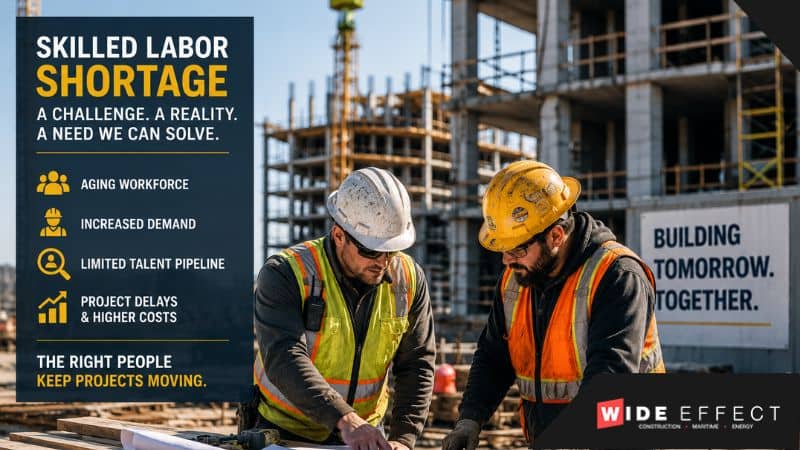

Today's labor market is reshaping how contractors estimate labor costs, prepare bids, and compete for new construction projects. Labor shortages, rising wages, and increased demand for skilled trades professionals have made workforce planning a critical part of every successful bid. Partnering with a trusted Construction Staffing provider helps contractors secure qualified workers, reduce hiring uncertainty, and improve labor forecasting while keeping projects on schedule.
Winning competitive bids now requires more than accurate material estimates and timelines. Contractors must also account for workforce availability, recruitment strategies, and changing labor market conditions. By leveraging Construction Staffing, businesses can strengthen their talent pipeline, control labor costs, improve bid accuracy, and confidently pursue new opportunities in an increasingly competitive construction market. Access to qualified skilled trades professionals allows contractors to respond more quickly to project demands, reduce hiring delays, improve workforce flexibility and deliver successful projects.
Today's labor market is changing how construction companies prepare bids, estimate project costs, and compete for new work. While material prices and project timelines have always been major considerations during the bidding process, workforce availability has become an equally important factor. Contractors must now account for labor shortages, rising wages, recruitment challenges, and the availability of skilled trades professionals before submitting competitive proposals.
Across North America, demand for commercial construction, industrial facilities, infrastructure projects, manufacturing plants, and data centers continues to increase. At the same time, many experienced tradespeople are retiring while fewer new workers are entering the industry. This imbalance has created significant competition for qualified electricians, carpenters, welders, pipefitters, HVAC technicians, heavy equipment operators, and project managers.
Unlike material costs, labor availability can change quickly. A contractor may prepare a competitive bid only to discover that qualified workers are unavailable when the project begins. Without sufficient staffing, project schedules may slip, productivity may decline, and overall project costs can increase.
The labor market now influences nearly every stage of the bidding process. Contractors must carefully evaluate workforce capacity before committing to project deadlines and pricing. Overestimating available labor can create expensive delays, while underestimating labor costs may reduce profitability.
Today's labor market affects construction bidding through:
Another challenge is the growing number of projects beginning simultaneously within the same region. Contractors frequently compete for the same pool of skilled trades professionals, making hiring more difficult and increasing labor costs. Businesses that fail to account for these market conditions may struggle to deliver projects on time or maintain expected profit margins.
Understanding labor market conditions before submitting bids allows contractors to make more informed decisions regarding staffing requirements, scheduling, and pricing. Rather than reacting to labor shortages after winning a project, successful companies build workforce planning into their estimating process from the beginning.
Partnering with an experienced Construction Staffing provider also gives contractors greater confidence when preparing bids. Access to qualified skilled trades professionals helps reduce uncertainty while improving workforce flexibility throughout every stage of a project.
COMPETITIVE BIDDING
Winning construction bids requires far more than offering the lowest price. Contractors must demonstrate that they have the workforce, experience, and operational capacity to complete projects safely, efficiently, and on schedule. In today's labor market, workforce planning has become one of the most important competitive advantages during the bidding process.
Estimators must now consider labor availability alongside material pricing, equipment costs, subcontractor coordination, and project timelines. A bid may appear profitable on paper, but unexpected hiring challenges can quickly affect labor costs and overall project performance once construction begins.
Many contractors are adjusting their bidding strategies by incorporating more realistic labor forecasts. Understanding local hiring conditions allows businesses to submit proposals that better reflect current workforce availability while reducing the likelihood of unexpected staffing shortages.
Several factors now influence bid competitiveness:
Communication between estimating teams and hiring managers has also become increasingly important. Estimators who understand current recruitment challenges can build more accurate labor assumptions into project budgets. Likewise, recruiting teams that receive advance notice of upcoming projects have additional time to identify qualified candidates before construction begins.
Contractors are also placing greater emphasis on employee retention. Retaining experienced workers reduces recruitment costs while preserving valuable project knowledge and maintaining workforce continuity. Companies with stable teams often experience fewer project disruptions and greater confidence when bidding larger or more complex projects.
Technology continues to improve bidding accuracy as well. Workforce planning software, scheduling platforms, labor forecasting tools, and recruitment systems help contractors evaluate workforce capacity while identifying potential staffing challenges before bids are submitted. Better information allows businesses to make smarter decisions while reducing project risk.
Working with a trusted Construction Staffing partner strengthens this process even further. Staffing specialists maintain extensive networks of qualified skilled trades professionals, allowing contractors to respond more quickly when projects are awarded. This added workforce flexibility helps businesses pursue additional opportunities without overextending existing teams.
Rather than viewing labor simply as another project expense, leading contractors recognize workforce planning as a strategic advantage that directly influences bidding success and long-term profitability.
BUILDING A STRONGER BIDDING STRATEGY
The construction industry will continue evolving as labor market conditions change. Contractors that build workforce planning into every stage of the bidding process will be better positioned to secure profitable projects while maintaining operational stability. Preparing successful bids now requires balancing competitive pricing with realistic labor expectations.
One of the most effective strategies is developing a long-term talent pipeline. Contractors that continually recruit, network, and strengthen relationships with skilled trades professionals are less vulnerable to labor shortages when new opportunities arise. Rather than beginning recruitment after winning a contract, they already have access to experienced candidates who can support project demands.
Strategic workforce planning also improves business flexibility. Contractors who understand future project schedules can forecast hiring needs, reduce last-minute recruitment, and allocate resources more effectively across multiple projects. This proactive approach minimizes scheduling conflicts while improving overall project execution.
Construction companies can strengthen their bidding strategy by:
Successful contractors also recognize the importance of maintaining strong relationships with employees. Experienced workers provide valuable knowledge, improve productivity, and help mentor newer team members entering the workforce. Investing in training, career development, and workplace culture creates stronger teams that support long-term business growth.
Flexibility has become another essential component of competitive bidding. Project schedules often change, labor demands fluctuate, and clients may require accelerated timelines. Contractors with access to additional skilled trades professionals can respond more quickly without sacrificing quality or project performance.
As construction demand continues growing across commercial, industrial, manufacturing, infrastructure, and data center sectors, workforce availability will remain one of the industry's greatest competitive challenges. Businesses that prepare today will be better positioned to pursue future opportunities with greater confidence.
Contractors should also regularly review labor market trends when updating their bidding strategies. Wage expectations, regional hiring conditions, and emerging project opportunities can all influence workforce availability. Staying informed allows companies to make better forecasting decisions while reducing unexpected labor-related risks during project execution.
Strong workforce planning also helps contractors build long-term client confidence. Companies that consistently secure qualified skilled trades professionals are better positioned to deliver projects on time, control labor costs, and compete for larger, more complex opportunities in an increasingly competitive construction market.
Partnering with an experienced Construction Staffing provider provides contractors with immediate access to qualified skilled trades professionals when workforce needs change. Staffing specialists help businesses reduce hiring timelines, strengthen workforce continuity, improve labor forecasting, and maintain productivity throughout every phase of a project.
The most successful construction companies understand that competitive bidding begins with workforce readiness. By combining proactive recruitment, employee retention, workforce planning, and Construction Staffing, contractors can improve bid accuracy, reduce hiring uncertainty, strengthen project delivery, and confidently compete for new opportunities in today's evolving construction market.
Your skills deserve more than short-term jobs and empty promises. Wide Effect connects hardworking tradespeople to steady commercial and industrial projects where experience, certifications, and reliability are valued. From apprentices to seasoned journeymen, we match you with roles that fit your skill level and keep your career moving forward. When you’re ready for a real opportunity, we’re ready to put you to work.
Contractors can remain competitive by strengthening workforce planning, building a reliable talent pipeline, investing in employee retention, monitoring labor market trends, and partnering with experienced staffing professionals. A proactive hiring strategy helps improve bid accuracy, control labor costs, and increase the likelihood of successful project delivery.
Construction Staffing helps contractors access qualified skilled trades professionals, reduce hiring uncertainty, and improve workforce planning before projects begin. This allows businesses to prepare more accurate bids, respond quickly to labor demands, and maintain project schedules after winning contracts.
Today's labor market has made workforce availability a critical part of the bidding process. Labor shortages, rising wages, and increased competition for skilled trades professionals can affect project costs, timelines, and bid accuracy. Contractors must account for these factors to submit realistic and competitive proposals.
Are you experiencing productivity challenges, skill gaps in your workforce, or do you need a short-term placement? Don't waste your time and money navigating these alone. We bring the process, experience, and placement successes you need to help resolve your workforce challenges efficiently. Call us at (833) 493-5627 or use the contact form to discuss your personalized staffing solution.
By submitting this form, you opt-in and give express consent to receiving SMS/text messages, calls, and emails from us for the purposes of communication related to your inquiry or related to the products and/or services we provide.
CONSTRUCTION STAFFING | LABOR MARKET | WORKFORCE PLANNING | CONSTRUCTION BIDDING | LABOR COSTS

We are the nation’s leading recruiting force for Construction,
Maritime, Renewable Energy, Oil & Gas, and Safety Personnel.
Whether you need labor or leadership, we deliver the talent
solutions that keep your projects moving.
Connect with our recruiters in all 50 states to access our proven staffing blueprint for success.