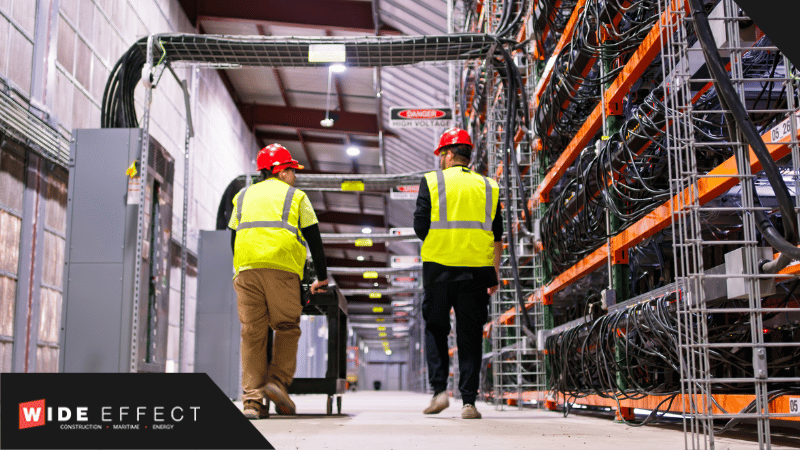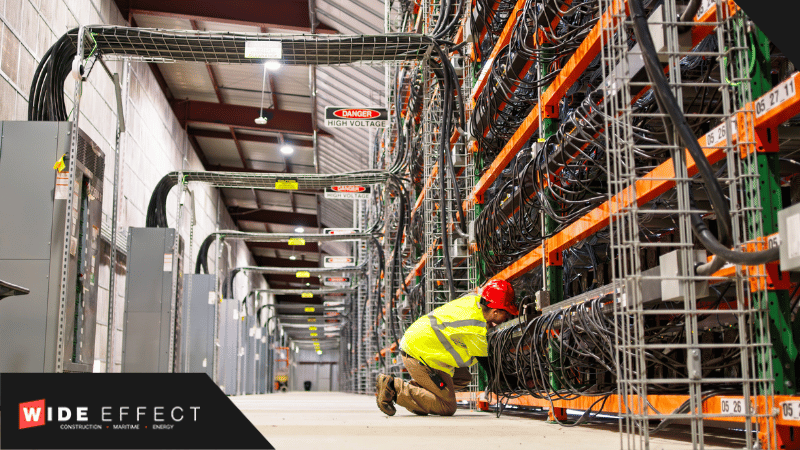

Demand for data center construction continues to accelerate, but workforce shortages are making it increasingly difficult for contractors to keep projects on schedule. Competition for experienced electricians, HVAC technicians, project managers, and other skilled professionals has intensified as mission-critical facilities become more complex. Partnering with a trusted Data Center Staffing provider helps businesses access qualified talent, reduce hiring delays, and maintain productivity throughout every stage of construction.
Successfully delivering data center projects requires more than careful planning and advanced technology. Contractors need proactive recruitment, workforce planning, and access to specialized professionals who can meet strict timelines and technical requirements. By leveraging Data Center Staffing, businesses can strengthen their talent pipeline, improve workforce flexibility, reduce project delays, and confidently support the growing demand for mission-critical data center construction.
Data center construction has become one of the fastest-growing sectors in the construction industry. As cloud computing, artificial intelligence, edge computing, and digital transformation continue driving demand for new facilities, contractors are under increasing pressure to deliver complex projects on aggressive timelines. While investment in new data centers continues to rise across North America, workforce shortages have emerged as one of the biggest obstacles to successful project delivery.
Unlike many commercial construction projects, data centers require highly specialized professionals with experience in mission-critical environments. Electricians, HVAC technicians, controls specialists, low-voltage installers, commissioning experts, project managers, and mechanical trades all play essential roles throughout construction. These professionals possess technical knowledge that cannot be replaced quickly, making qualified workers increasingly difficult to recruit.
Demand has increased rapidly as technology companies, cloud service providers, financial institutions, healthcare organizations, and government agencies continue expanding digital infrastructure. At the same time, many experienced tradespeople are reaching retirement age while fewer younger workers are entering skilled trades careers. This combination has significantly reduced the available workforce.
Contractors frequently compete against multiple industries for the same specialized talent. Manufacturing facilities, industrial plants, renewable energy projects, semiconductor facilities, and commercial developments all require experienced electricians, mechanical specialists, and project leaders. Competition for these professionals continues driving hiring challenges across the construction industry.
Workforce shortages affect nearly every phase of data center construction, including:
Because data centers operate around the clock, every system must meet strict reliability and performance standards before becoming operational. Even small staffing shortages can delay inspections, commissioning activities, and project completion. Missed deadlines may also create financial consequences for owners waiting to deploy critical infrastructure.
Labor shortages also increase scheduling complexity. Contractors often need multiple specialty trades working simultaneously to maintain project momentum. When one trade experiences staffing shortages, the entire construction schedule can be affected, creating delays for other subcontractors and increasing overall project costs.
As demand continues growing, contractors are placing greater emphasis on proactive workforce planning rather than reacting after labor shortages occur. Building relationships with experienced staffing partners allows businesses to secure qualified professionals earlier while improving workforce flexibility throughout each project.
Partnering with an experienced Data Center Staffing provider helps contractors reduce hiring uncertainty by providing access to skilled professionals capable of supporting mission-critical construction projects. Rather than relying solely on traditional recruiting methods, staffing specialists help businesses respond quickly when workforce demands increase.
PROJECT DELAYS
Workforce shortages affect much more than hiring. They directly influence project schedules, budgets, productivity, and client expectations throughout every phase of construction. Data center owners often work with aggressive completion schedules because new facilities support expanding digital infrastructure, cloud services, and enterprise operations. Delays can have significant financial and operational consequences.
One of the biggest challenges is securing experienced professionals before construction begins. Contractors that underestimate hiring timelines may struggle to mobilize sufficient labor, delaying early project milestones. Once construction falls behind schedule, recovering lost time becomes increasingly difficult.
Specialized trades present another challenge. Data center construction depends heavily on professionals with experience installing electrical distribution systems, backup power infrastructure, precision cooling equipment, fire suppression systems, and structured cabling. These roles require technical expertise that general construction labor cannot immediately replace.
Several workforce challenges contribute to project delays:
Contractors must also balance workforce requirements across multiple active projects. Companies working on commercial construction, manufacturing facilities, industrial plants, and data centers may need the same electricians, HVAC technicians, and project managers simultaneously. Allocating limited labor resources becomes increasingly difficult as project demand continues growing.
Communication between estimating teams, project managers, and recruiting professionals has become more important than ever. Better workforce forecasting allows contractors to identify hiring needs months before construction begins. Early planning reduces last-minute recruitment while improving scheduling accuracy.
Employee retention also plays a significant role in preventing project delays. Experienced workers contribute technical knowledge, productivity, and leadership that help projects progress efficiently. Replacing highly skilled professionals during construction often creates additional recruitment costs while increasing project risk.
Technology is helping contractors improve workforce management as well. Labor forecasting software, scheduling platforms, workforce analytics, and recruiting systems provide greater visibility into staffing requirements before shortages affect project timelines. These tools allow businesses to make informed hiring decisions while improving project planning.
Working with a trusted Data Center Staffing partner provides additional workforce flexibility. Staffing specialists maintain networks of qualified professionals who can support projects during peak demand, helping contractors reduce hiring timelines while minimizing disruptions to project schedules.
Rather than viewing workforce planning as a separate business function, successful contractors integrate staffing strategies directly into project planning, allowing them to respond faster to changing labor market conditions.
BUILDING THE WORKFORCE
Long-term success in data center construction depends on creating sustainable workforce strategies that address both current labor shortages and future industry growth. Contractors that invest in recruitment, employee retention, workforce planning, and ongoing training are better positioned to meet increasing demand while maintaining consistent project performance.
Building a reliable talent pipeline requires continuous effort. Rather than recruiting only when projects begin, successful contractors maintain relationships with trade schools, apprenticeship programs, technical colleges, industry organizations, and experienced staffing professionals throughout the year. This proactive approach reduces hiring delays while improving workforce availability.
Training and mentorship remain essential investments. Experienced electricians, HVAC technicians, controls specialists, and commissioning professionals possess valuable knowledge that benefits newer workers entering the industry. Structured mentorship programs accelerate learning while preserving technical expertise that might otherwise be lost through retirement.
Contractors can strengthen their workforce by:
Creating a positive workplace culture also improves recruitment and retention. Skilled professionals increasingly evaluate employers based on career development opportunities, leadership, workplace safety, project quality, and long-term stability in addition to compensation. Companies that invest in employee satisfaction often experience stronger workforce continuity and lower turnover.
Flexibility has become another competitive advantage. Project schedules frequently change as clients accelerate deployment timelines or expand facility requirements. Contractors with access to additional skilled professionals can respond more quickly while maintaining productivity and minimizing project disruptions.
Regular workforce forecasting also supports better business planning. Monitoring labor availability, regional hiring trends, retirement projections, and future project demand allows contractors to identify staffing needs before shortages become critical. Early planning improves budgeting while reducing hiring uncertainty.
Construction companies should also strengthen relationships with specialized staffing providers that understand mission-critical environments. Access to experienced electricians, mechanical specialists, controls technicians, and project managers allows businesses to adapt quickly as workload changes throughout the year.
As investment in artificial intelligence infrastructure, cloud computing, enterprise technology, and digital services continues expanding, demand for qualified data center professionals will remain strong. Contractors that prepare today will be better positioned to secure new opportunities while maintaining reliable project delivery.
Partnering with an experienced Data Center Staffing provider gives contractors immediate access to qualified professionals who understand the unique requirements of mission-critical construction. Staffing specialists help businesses reduce hiring delays, improve workforce continuity, strengthen labor forecasting, and maintain productivity throughout every phase of a project.
No single hiring strategy can solve today's workforce shortages. By combining proactive recruitment, employee retention, workforce planning, mentorship, and Data Center Staffing, contractors can build resilient teams capable of supporting complex data center construction projects while remaining competitive in one of the fastest-growing sectors of the construction industry.
Contractors can strengthen their workforce by investing in workforce planning, building a reliable talent pipeline, supporting apprenticeship and training programs, improving employee retention, and partnering with experienced staffing professionals. A proactive hiring strategy helps ensure skilled workers are available as new data center projects move forward.
Data Center Staffing helps contractors quickly connect with experienced professionals who understand the unique requirements of mission-critical construction. Access to qualified talent reduces hiring delays, improves workforce flexibility, and helps keep projects on schedule.
Data center construction requires highly skilled professionals such as electricians, HVAC technicians, controls specialists, and project managers. As demand for mission-critical facilities continues to grow, contractors face increased competition for qualified talent, making workforce shortages a major cause of project delays.
Are you experiencing productivity challenges, skill gaps in your workforce, or do you need a short-term placement? Don't waste your time and money navigating these alone. We bring the process, experience, and placement successes you need to help resolve your workforce challenges efficiently. Call us at (833) 493-5627 or use the contact form to discuss your personalized staffing solution.
By submitting this form, you opt-in and give express consent to receiving SMS/text messages, calls, and emails from us for the purposes of communication related to your inquiry or related to the products and/or services we provide.
DATA CENTER | WORKFORCE SHORTAGES | MISSION CRITICAL | STAFFING SOLUTIONS | CONSTRUCTION DELAYS

We are the nation’s leading recruiting force for Construction,
Maritime, Renewable Energy, Oil & Gas, and Safety Personnel.
Whether you need labor or leadership, we deliver the talent
solutions that keep your projects moving.
Connect with our recruiters in all 50 states to access our proven staffing blueprint for success.