
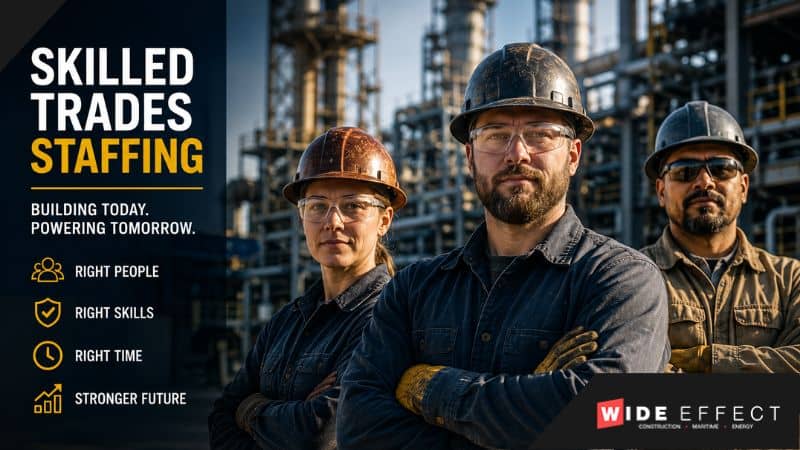
The demand for skilled trades professionals continues to grow across North America, making workforce availability one of the biggest challenges facing employers in 2026. Construction companies, manufacturers, infrastructure developers, energy providers, and industrial organizations all rely on skilled workers to complete projects, maintain operations, and support business growth. However, many employers are finding it increasingly difficult to recruit and retain qualified trades professionals.
As experienced workers retire and project activity accelerates, competition for talent has intensified across nearly every sector. Companies that cannot secure the workers they need may face project delays, reduced productivity, increased labor costs, and missed growth opportunities. This has made Skilled Trades Staffing more valuable than ever before. Access to qualified trades professionals allows organizations to maintain workforce flexibility, support project timelines, and remain competitive in a rapidly changing labor market.
One of the primary reasons Skilled Trades Staffing has become increasingly important is the ongoing shortage of qualified workers. For many years, employers have faced challenges attracting enough workers to replace retiring trades professionals.
Many skilled workers are reaching retirement age, creating significant workforce gaps throughout industries that depend on technical expertise and hands-on experience. At the same time, fewer younger workers have entered trades careers compared to previous generations.
The result is a growing imbalance between workforce supply and industry demand.
Trades experiencing significant shortages include:
At the same time, demand for these professionals continues to increase due to infrastructure investment, industrial expansion, manufacturing growth, and ongoing construction activity.
Employers often find themselves competing aggressively for the same limited talent pool. Traditional recruiting methods may no longer provide sufficient access to qualified candidates, particularly for highly specialized positions.
Skilled Trades Staffing helps organizations navigate these challenges by providing access to broader talent networks and recruiting expertise focused specifically on skilled labor markets.
The modern workforce environment is more dynamic than ever. Companies frequently experience changing labor requirements based on project schedules, seasonal demands, economic conditions, and customer needs.
Many organizations require workforce flexibility to remain competitive.
For example:
Construction projects may require additional workers during peak phases.
Manufacturing facilities may need support during production increases.
Industrial shutdowns may create short-term labor demands.
Infrastructure projects may require specialized trades expertise.
Hiring permanent employees for every workforce need is not always practical. Labor requirements often fluctuate, making flexible staffing solutions increasingly valuable.
Skilled Trades Staffing allows employers to scale their workforce based on actual project demands. Temporary, contract, temp-to-hire, and direct-hire solutions provide organizations with options that support operational efficiency while controlling labor costs.
This flexibility can help businesses respond quickly to changing market conditions without sacrificing productivity.
Staffing support also helps reduce hiring timelines. Rather than spending weeks recruiting candidates independently, employers can often access qualified workers much faster through established staffing partnerships.
In today's competitive labor market, the ability to quickly secure skilled workers can significantly influence project success.
While immediate labor needs are important, many organizations are also focused on long-term workforce planning. The skilled labor shortage is not expected to disappear anytime soon, making proactive workforce strategies essential for sustainable growth.
Companies increasingly recognize that workforce development requires a combination of recruiting, retention, training, and strategic planning.
Skilled Trades Staffing partners often help organizations:
This support allows employers to focus on operations while maintaining access to qualified workers when needed.
Another advantage of Skilled Trades Staffing is access to candidates who may not actively be searching through traditional job boards. Many experienced trades professionals work through recruiter networks and staffing partnerships, creating opportunities that employers may not otherwise reach.
As industries continue to evolve and labor competition remains strong, workforce planning will play an increasingly important role in business success.
Organizations that invest in flexible staffing strategies and maintain reliable access to skilled workers are often better positioned to manage labor shortages, support growth initiatives, and maintain operational performance. Skilled Trades Staffing provides the workforce solutions many companies need to navigate today's labor market while preparing for tomorrow's opportunities.
Wide Effect provides workforce infrastructure for organizations operating in regulated, labor-intensive industries where schedule integrity, compliance alignment, and cost control are critical to performance.
Our end-to-end solutions include direct-hire and temp-to-hire recruiting, contingent workforce management, Employer of Record services, payroll processing and funding, managed workforce programs, and strategic labor optimization. We structure workforce deployment to reduce risk exposure, centralize administrative control, and maintain predictable labor performance across projects and regions.
Built for construction, maritime, energy, manufacturing, and other safety-driven sectors, Wide Effect enables disciplined, scalable workforce execution across the United States.
Several factors are contributing to increased demand for skilled trades workers. Large infrastructure projects, industrial growth, construction activity, and manufacturing expansion all require qualified trades professionals. At the same time, many experienced workers are retiring, creating workforce shortages across multiple industries. These trends have increased competition for talent and made recruiting more challenging for employers.
Many industries rely heavily on Skilled Trades Staffing solutions, including construction, manufacturing, energy, transportation, infrastructure, industrial maintenance, and utilities. Any organization that depends on electricians, welders, millwrights, pipefitters, HVAC technicians, equipment operators, or other skilled professionals can benefit from access to qualified workers through staffing partnerships.
Skilled Trades Staffing provides access to larger talent pools, specialized recruiting expertise, and flexible workforce solutions. Staffing partners actively recruit qualified candidates and maintain networks of skilled professionals across multiple trades. This helps employers fill positions more efficiently, reduce hiring timelines, maintain project schedules, and adapt to changing workforce demands while supporting long-term growth objectives.
Are you experiencing productivity challenges, skill gaps in your workforce, or do you need a short-term placement? Don't waste your time and money navigating these alone. We bring the process, experience, and placement successes you need to help resolve your workforce challenges efficiently. Call us at (833) 493-5627 or use the contact form to discuss your personalized staffing solution.
By submitting this form, you opt-in and give express consent to receiving SMS/text messages, calls, and emails from us for the purposes of communication related to your inquiry or related to the products and/or services we provide.

We are the nation’s leading recruiting force for Construction,
Maritime, Renewable Energy, Oil & Gas, and Safety Personnel.
Whether you need labor or leadership, we deliver the talent
solutions that keep your projects moving.
Connect with our recruiters in all 50 states to access our proven staffing blueprint for success.